
Best Advertising Methods for Small Businesses: End the Gamble
Are you a small business owner relying on word-of-mouth and hoping for referrals to grow? Many entrepreneurs find themselves stuck in what we call the "Referral Trap," a cycle of unpredictable growth where every month feels like a gamble. You know you need more customers, but the path to acquiring them consistently feels murky, expensive, or just plain overwhelming.
The good news? You don't have to stay there. In a world saturated with noise, identifying the best advertising methods for small businesses is not just crucial, it's the difference between merely surviving and truly thriving. This guide will cut through the complexity, revealing potent business advertising strategies that actually work. We'll explore various approaches, from digital powerhouses to overlooked offline gems, ensuring you have a clear roadmap to stop hoping and start commanding traffic.
Imagine having a predictable system that consistently brings in new clients, allowing you to scale with confidence. This isn't just a pipe dream. It's the reality for businesses that understand and implement robust business advertising. If you're ready to break free from the guesswork and build a sustainable customer acquisition engine, you're in the right place.
For those truly committed to transforming their marketing, we'll also introduce a powerful resource :The New Customer Bible, a strategic manual designed to help businesses command traffic and predictable growth.
The Foundation: Why Most Small Business Advertising Fails
Before diving into specific tactics, it's essential to understand why many small businesses struggle with advertising, even when they invest significant time and money. The truth is, without a strategic foundation, even the most promising ad campaigns can fall flat.
The "Hope Marketing" Trap
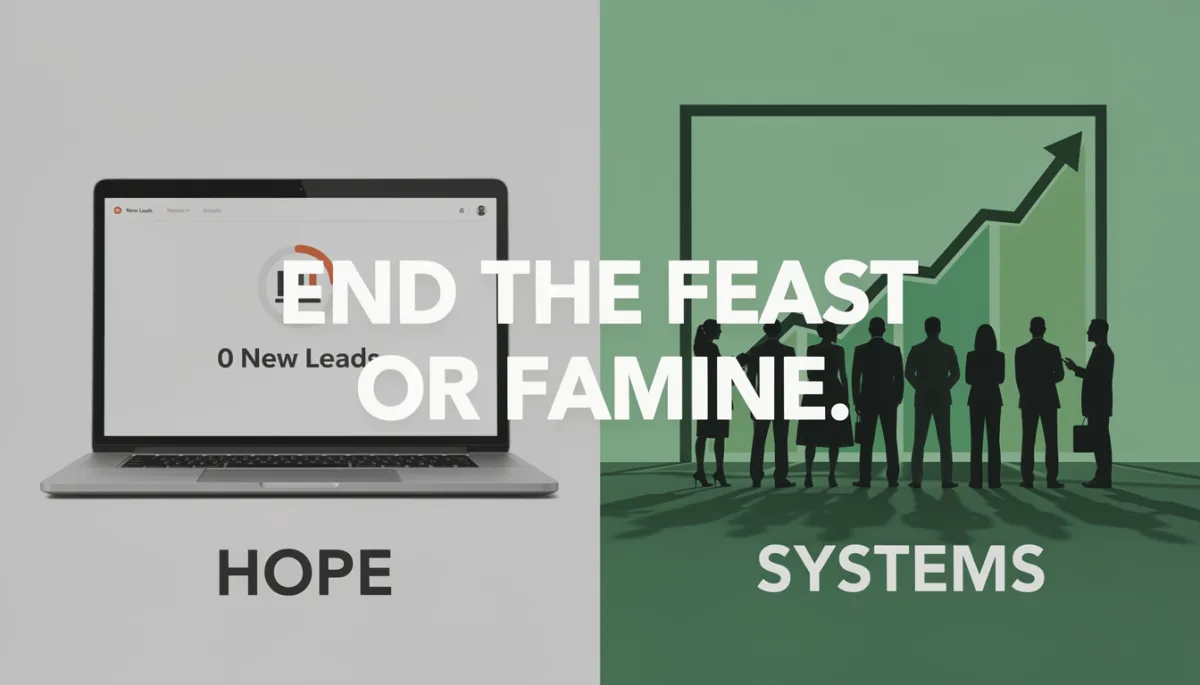
This is where most small businesses get stuck. They launch an ad, post on social media, or send out a flyer, and then... they hope. Hope for engagement, hope for sales, hope for referrals. This isn't a strategy; it's a prayer. "Hope Marketing" is characterized by inconsistency, lack of measurement, and a reactive approach to customer acquisition. It's relying on luck instead of leverage.
Without a clear understanding of your customer's journey, your unique selling proposition, or a predictable framework for engagement, you're essentially throwing darts in the dark. This leads to wasted ad spend and profound frustration, making you question if any advertising methods for small businesses truly work.
Lacking a Clear Blueprint
Another common pitfall is the absence of a structured plan. Many business owners jump from one shiny new tactic to another without integrating them into a cohesive strategy. They might try Facebook ads one month, then Google ads the next, never truly optimizing or understanding the full cycle of customer acquisition.
A successful advertising strategy isn't a collection of disparate tactics; it's an interconnected system designed to move potential customers from awareness to conversion and retention. Without a blueprint, you lack the ability to diagnose what's working, what's not, and precisely why your business isn't growing as fast as you desire. This is precisely why strategic guides, like The New Customer Bible, emphasize foundational frameworks before execution.
Top Advertising Methods for Small Businesses That Deliver Results
Now that we've diagnosed the common pitfalls, let's explore the most effective advertising methods for small businesses. These aren't just random tactics; they are proven strategies that, when implemented correctly, can transform your customer acquisition process. Remember, the goal is not just visibility, but measurable results that contribute directly to your bottom line.
Digital Dominance: Online Advertising Essentials
In today's interconnected world, a strong digital presence is non-negotiable. These online business advertising strategies offer unparalleled reach and targeting capabilities.
Search Engine Marketing (SEM/PPC):Ever noticed those ads at the top of Google search results? That's SEM. Pay-Per-Click (PPC) advertising allows you to bid on keywords related to your business, putting your offer directly in front of people actively searching for your products or services.
Benefit: High intent audience, immediate visibility.
Action: Start with Google Ads; consider Microsoft Advertising for broader reach.
Social Media Advertising: Platforms like Facebook, Instagram, LinkedIn, and TikTok offer powerful targeting tools, allowing you to reach specific demographics, interests, and behaviors. Whether it's eye-catching visuals on Instagram or professional networking on LinkedIn, social media ads can build brand awareness and drive conversions.
Benefit: Precise audience targeting, strong brand building.
Action: Choose platforms where your target audience spends the most time.
Content Marketing & SEO: This isn't strictly "advertising" in the traditional sense, but it's one of the most sustainable business advertising strategies. By creating valuable blog posts, videos, or guides (like this one!), you attract organic traffic from search engines. Search Engine Optimization (SEO) ensures your content ranks high for relevant keywords, bringing qualified leads to your digital doorstep.
Benefit: Long-term authority, free organic traffic.
Action: Identify keywords, create high-quality content, optimize for search.
Email Marketing: Often overlooked, email marketing consistently delivers one of the highest ROIs. Once you've captured a lead's email (perhaps with a valuable lead magnet like The New Customer Bible), you can nurture them with targeted content, promotions, and personalized communication.
Benefit: Direct communication, high conversion rates, builds loyalty.
Action: Build an email list, segment your audience, send valuable content regularly.
Offline Outreach: Traditional Advertising with a Twist
While digital methods dominate, smart small businesses understand the power of integrating offline strategies, especially for local markets. These traditional advertising methods for small businesses can create deep connections and reinforce your brand's presence.
Local Partnerships & Events: Collaborate with complementary local businesses or sponsor community events. This builds goodwill, expands your reach to a relevant audience, and provides excellent networking opportunities.
Benefit: Builds community trust, highly targeted local exposure.
Action: Identify non-competing businesses with similar customer bases; research local events.
Direct Mail (Targeted):Forget junk mail. Modern direct mail is highly targeted, personalized, and can stand out in a cluttered digital inbox. Think postcards for specific neighborhoods or personalized letters to previous customers.
Benefit: High open rates (physical mail), stands out from digital noise.
Action: Use CRM data to target specific customer segments or geographic areas.
Niche Print/Radio Advertising: If your target audience consumes specific local newspapers, magazines, or radio stations, these can still be effective. The key is to be highly selective and measure results.
Benefit: Reach specific niche audiences.
Action: Research local media consumption habits of your ideal customer.
The Power of Referral Systems (Beyond "Hope")
Remember the "Referral Trap"? The solution isn't to abandon referrals but to systematize them. One of the truly transformative best advertising strategies for small businesses is to create a structured referral program.
Structured Referral Programs: Instead of passively hoping for referrals, actively encourage and reward them. This could involve offering discounts to both the referrer and the referred customer, or tiered rewards for consistent referrers.
Benefit: Leverages existing customer loyalty, low acquisition cost, high trust.
Action: Design clear incentives, communicate the program clearly, make it easy to refer.
Mastering Your Business Advertising Strategies with the Money Circle Blueprint
Now, here's where we move beyond just knowing the best advertising methods for small businesses and into truly commanding your market. Understanding individual tactics is one thing; weaving them into a coherent, predictable system is another entirely. This is the core challenge many entrepreneurs face.
Many businesses find themselves trying various strategies without a unifying framework, leading to inconsistent results and frustration. This is precisely why we created The New Customer Bible. This 168-page strategic manual is not just another book; it's a complete blueprint designed to help you stop relying on "Hope Marketing" and start commanding predictable traffic and revenue.
"The New Customer Bible helped me see the cracks in my marketing foundation. Now, I have a clear path to consistent customer acquisition."- A Satisfied Business Owner
At its heart is the proprietary "Money Circle" Blueprint. This framework provides a clear, step-by-step roadmap for customer acquisition, ensuring every dollar you invest in business advertising is working towards a measurable return. It integrates the10 Commandments of Customer Acquisition, fundamental principles that cut through the noise and show you exactly what truly moves customers to action.
Imagine having access to high-level psychology for conversion, simplified into actionable steps. The New Customer Bible includes:
The "Money Circle" Blueprint for predictable scaling.
The 10 Commandments Framework: your strategic compass.
"Pixar" Storytelling Templates to captivate your audience.
The 5-Minute Follow-Up Rule for maximizing conversions.
Proven Traffic & Retention Strategies to build lasting customer relationships.
This powerful resource helps you:
End Reliance on "Hope Marketing": Gain a scientific approach to marketing.
Provide a Predictable Roadmap for Scaling: Know exactly where your next customer is coming from.
Teach High-Level Psychology for Conversion: Understand what truly drives buying decisions.
Diagnose Exactly Why a Business Isn't Growing: Pinpoint and fix your conversion bottlenecks.
Whether you're a startup needing a go-to-market strategy, a business owner stuck in the "Referral Trap," or a marketer looking to refine fundamental principles, The New Customer Bible offers invaluable insights. Use it to build a marketing strategy from scratch, train your sales and marketing team, or generate leads via your opt-in funnel.
This manual isn't just about theory; it's about practical application that transforms your understanding of best advertising strategies for small businesses. And for a limited time, you can get it for Free(valued at $97) as our way of helping you begin your journey to predictable growth.

Implementing Your Advertising Plan: Key Steps
Knowing the best advertising methods for small businesses is only half the battle; effective execution is what truly drives success. As you implement these strategies, remember that consistent effort and data-driven decisions will be your greatest assets.
1. Define Your Target Audience
Who are you trying to reach? What are their demographics, psychographics, pains, and desires? The more precisely you understand your ideal customer, the more effectively you can tailor your messaging and choose the right advertising channels. A well-defined audience ensures your business advertising budget isn't wasted on irrelevant eyeballs.
2. Set Clear, Measurable Goals
What do you want to achieve with your advertising? More leads? Increased website traffic? Higher sales? Clearly defined, SMART (Specific, Measurable, Achievable, Relevant, Time-bound) goals are crucial for evaluating the success of your campaigns. Without them, you won't know if your business advertising strategies are truly working.
3. Track & Optimize Relentlessly
Advertising is not a "set it and forget it" endeavor. You must continuously monitor your campaigns, analyze the data, and make adjustments. Which ads are performing best? Which channels deliver the highest ROI? This iterative process of tracking and optimizing is what separates average results from breakthrough success. Tools like Google Analytics and your ad platform dashboards are invaluable here. Learn more about tracking your marketing efforts.
Conclusion: Command Your Customer Acquisition, Don't Just Hope
The journey to consistent customer acquisition for your small business doesn't have to be a mystery. By understanding the common pitfalls and implementing proven advertising methods for small businesses, you can transform your growth trajectory. We've explored a range of effective digital and traditional tactics, emphasizing the importance of a strategic, data-driven approach.
From mastering search engine marketing to leveraging the power of structured referral programs, each method contributes to a stronger, more resilient marketing engine. But remember, the true power lies not in individual tactics, but in their synergy, guided by a robust framework.
If you're ready to stop relying on luck and start commanding predictable customer flow, then it's time to equip yourself with the ultimate strategic advantage. Don't just hope for your next customer; go out and get them with confidence and clarity. The time to revolutionize your business advertising strategies is now.
Ready to transform your business's future?
Download your FREE copy of The New Customer Bible today! Discover the "Money Circle" blueprint and the 10 Commandments of Customer Acquisition that will provide the best advertising strategies for small businesses, helping you build a predictable, scalable growth engine.
Frequently Asked Questions About Small Business Advertising
Here are answers to some common questions entrepreneurs have about effective business advertising strategies.
Q: What are the most cost-effective advertising methods for small businesses?
A: For many small businesses, content marketing (SEO), email marketing, and highly targeted social media advertising often provide excellent ROI. Structured referral programs also offer a low-cost, high-trust acquisition channel. The key is to know your audience and where they spend their time, rather than spreading your budget too thin across all channels.
Q: How can I measure the success of my advertising campaigns?
A: Success is measured against your clearly defined goals. Key metrics include Cost Per Click (CPC), Cost Per Lead (CPL), Conversion Rate, Return on Ad Spend (ROAS), and Customer Lifetime Value (CLTV). Use analytics tools like Google Analytics, Facebook Ads Manager, and your CRM to track these metrics and make data-driven decisions.
Q: What is "The New Customer Bible" and how can it help my small business?
A: The New Customer Bible is a 168-page strategic manual designed to help businesses, particularly small businesses stuck in the "Referral Trap," develop a predictable system for customer acquisition. It introduces the proprietary "Money Circle" framework and the "10 Commandments" of customer acquisition, providing a clear blueprint, high-level psychology for conversion, and practical strategies to command traffic and predictable growth. It diagnoses why a business isn't growing and offers a roadmap to scale.